 Lacto-Fermenation is one of the oldest food preservation methods still regularly used. It is not Witchcraft or Sorcery and it's effective tasty and pretty much bullet proof. If it tastes good, then it's good. Plus the resultant pickles have the benefit of home made probiotics. Lacto-Fermentation has nothing to do with dairy products, the lacto refers to lactic acid. All fruits and vegetables have beneficial bacteria such as Lactobacillus on the surface. In an anaerobic (oxygen-free) environment, these bacteria convert sugars into lactic acid, which inhibits harmful bacteria and acts as a preservative. It's also what gives fermented foods their characteristic sour flavour. The earliest record of fermentation dates back as far as 6000 B.C. in the Fertile Crescent -and nearly every civilization since has included at least one fermented food in its culinary heritage. From Korean kimchi and Indian chutneys to the ubiquitous sauerkraut.
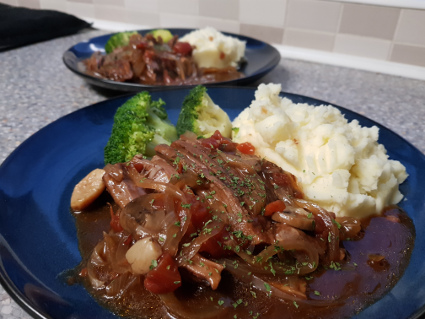
Some of the lowest price cuts of Beef have the most flavour provided that you cook them low & slow. Your friendly Slow Cooker is idea for this…..
Ingredients:-
500g of Skirt Beef
1 Onion, Sliced
60ml of Olive Oil
1 Tsp of Ground Cumin
1 Tsp of dried Tarragon
1 Tsp of Oregano
½ a Tsp of Chilli Flakes
1 Tin of Chopped Tomatoes, plus half of the tin of Water
1 Bulb of Garlic, peeled and separated
2 Bay Leaves
300Ml of Beef Stock
100g of Mushrooms, sliced
Salt & Pepper to season
Method:-
(1) In the Slow Cooker add the sliced Onions then lay the Skirt on top.
(2) Combine the Oil, Cumin, Tarragon, Salt, Pepper, Oregano and Chilli Flakes.
(3) Drizzle this over the Meat.
(4) Add the Tomatoes, Water and Stock over and around the Meat.
(5) Add the Mushrooms and Bay Leaves.
(6) Gently stir.
(7) Cook on ‘High’ for 5 to 6 hours or until the Beef is very tender..
(8) Find and remove the Bay Leaves before serving.
We served ours with Broccoli and Mashed Potatoes. The flavours and texture were really good. A proper Autumn warmer. This would easily have fed 4 people. The remainder will be used over a giant Toad-In-The-Hole tonight…...


